5-axis machining refers to a machine's ability to move a tool or a part in five different axes simultaneously. Basic machining operates on three primary axes, X,Y, and Z; however, a 5-axis CNC machining tool can rotate two additional axes, A and B, which give the cutting tool a multidirectional approach.
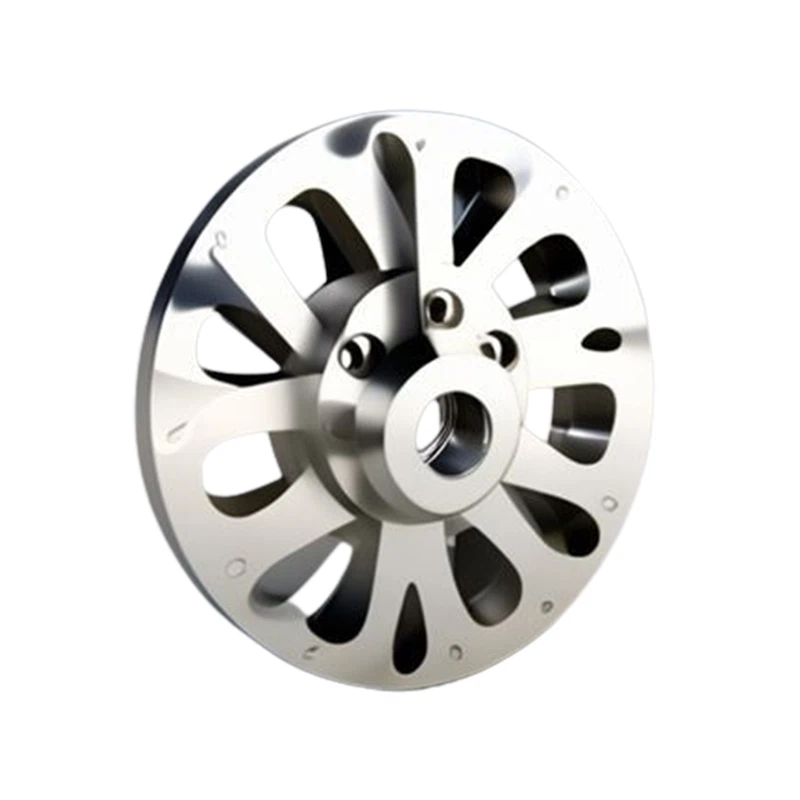
Minimized setup
A 5-axis machine allows you to work on every surface, apart from the clamping area and the bottom. When working on contoured parts or parts that require machining on several faces, you need several setups of the 3-axis machine to achieve the complex geometry through manual rotating; 5-axis technology completes the job in a single setup, reducing the number of setups and helping you save time.
Complex designs
The additional movement available with 5-axis machining allows you to achieve complex shapes and designs. With the 5-axis machine, you have access to machining angles and arcs that were previously achievable only through multiple setups and a myriad of special fixtures. Ultimately, 5-axis machining eliminates the need to create complex fixtures as you can hold the part once and rotate in a single process to achieve the desired geometry.
Rotational accuracy
Every time you remove a part from a machine, you lose the precise alignment that allows you to achieve superior quality. Unlike 3-axis machining, 5-axis machining improves accuracy by allowing you to complete a task in a single set up, and create multiple and complex shapes without losing the precision required to maintain quality.
Faster material removal
In 5-axis machining, the cutting tool remains tangential to the cutting surface, allowing for low cycle times, which helps save costs as you remove more material each time the tool passes.
Better surface finishes
The fourth and fifth axes help you orient and bring the part closer to the cutting tool, allowing you to use a shorter cutting tool, which is less susceptible to vibration at extremely high cutting speeds, helping you achieve a better surface finish. It also saves you time; when using a 3 axis machine, you must make use of very small cuts to achieve a good surface finish, which leads to longer lead times.
A 5-axis CNC machine works automatically with minimal human intervention. It uses rotary cutting tools to shape materials placed on the machine platen.
However, placing the material on the platen is the last phase in the 5-axis CNC machining process. The first step in 5-axis CNC machining is making a CAD design of the part and translating it into CAM. CAM, or computer-aided manufacturing, is software that helps generate CNC alphanumeric language or G-code.
The next phase in the process is uploading the G-code into the 5-axis CNC machine. The G-code is very important since it contains instructions that would direct the machine on the toolpath and the right tool for machining.
Simultaneous 5-axis CNC machining: Simultaneous 5-axis CNC machining is also called continuous 5-axis CNC machining. When the generic ‘5-axis CNC machining’ term is used, this is the technology it refers to. In this process, the cutting tools are capable of moving in all five axes simultaneously.
3+2 machining: The 3+2 machining process is also known as positional 5-axis machining or indexed 5-axis machining. In this method, the cutting tool is locked in a tilted position in the A and B axis, and then the 3-axis CNC machining is carried out in the X, Y, and Z axis.
4+1 machining: 4+1 machining is another variation of 5-axis machining which locks one rotary axis while allowing movement in the 3 linear axes (X, Y, and Z) and any single rotary axis. It provides a middle way between 3+2 machining and simultaneous 5-axis machining.
Aerospace components
The aerospace industry requires components with organic shapes with contoured edges and compound shapes. Aerospace parts are unique and geometrically intricate, making 5-axis machining the ideal technology of choice. This process achieves a high level of detail and reduces the need for re-fixturing of the cutting head. Thus, parts for aerospace applications remain as precise as possible, meeting industry standards.
Medical equipment
Quality and precision are non-negotiable when it comes to manufacturing medical equipment. The high-precision capabilities of the 5-axis fabrication process assist in the production of implants, devices, and other equipment to meet rigorous healthcare requirements. Most of the components are small and intricate. Others are complex electrical scanning and monitoring equipment. 5-axis technology offers an efficient and cost-effective means of producing these components.
Energy production
The energy industry often requires complex and advanced components, including solar power systems and power stations. The rapid emergence of 5-axis machining ensures CNC precision machining of detailed and specific parts for energy equipment. These parts are machined to be durable and provide stability to workspaces.
To understand the fundamentals of 5-axis CNC machining, it is important to understand how the cutting tool moves in the various axes in this technology. Every axis is denoted by a letter for the purpose of simplicity and standardization.Here are the different axis present in 5-axis CNC machining:
X-axis: Movement of left to right
Y-axis: Movement of top to bottom (or up and down)
Z-axis: Movement of front to back (or in and out)
A-axis: Rotary axis, rotation around the X-axis
B-axis: Rotary axis, rotation around the Y-axis
Deciding between 5-axis machining centers and other techniques can be pretty challenging. There are many factors to consider to ensure you make the best choice. Here’s a comparison between this technology and other methods.
5-Axis CNC Machining vs. 3+2-Axis CNC Machining
Many people tend to confuse these two techniques. 5-axis CNC machining, also known as continuous 5-axis machining, involves the continuous rotation of cutting tools along five axes. In contrast, 3+2-axis machining executes a 3-axis program. During this process, the cutting tool is locked at an angle. The two rotary axes determine this angle.
The main advantage of 5-axis over 3+2-axis CNC machining is speed. The latter involves constant stopping and starting of the machine between each tool orientation. However, the former completes the cutting in a single operation. Furthermore, 5-axis machining is more suitable for complex surfaces, while 3+2-axis CNC machining works mainly for plane processing.
Since 5-axis machines require lesser clamps and no special fixture, the machining cost is lower than with 3+2-axis counterparts. However, you should note that the programming involved with the 5-axis technology is much more complicated than the 3+2-axis machining.
5-Axis CNC Machining vs. 3D Printing
Unlike the 5-axis CNC machining process, 3D printing is an additive manufacturing process that involves building components one layer at a time. While these technologies differ in their mode of operation, there are more overlaps in their application. They both offer high accuracy, fast turnaround, increased repeatability, and excellent surface finishes.
3D printing does not require special fixtures or tooling. As a result, the initial setup cost is also minimal. However, 5-axis CNC machines offer better dimensional accuracy than 3D printing. They can machine small and very large parts accurately. Getting extremely tight tolerances with 3D printing will require additional post-processing operations.
5-axis CNC machining can work with a wide range of materials, including metals, plastics, composites, and some advanced materials. The suitability of a material for 5-axis machining depends on factors such as its hardness, machinability, and stability during the machining process. Here are some common materials that are suitable for 5-axis machining:
1.Metals
Aluminum: Aluminum alloys are widely used in 5-axis machining due to their excellent machinability, low density, and high strength-to-weight ratio. They are commonly used in aerospace, automotive, and general engineering applications.
Stainless steel: Stainless steel is a popular choice for various components, offering good corrosion resistance and mechanical properties. However, some grades may be more challenging to machine than others.
Titanium: Titanium alloys are known for their exceptional strength, low weight, and biocompatibility, making them suitable for aerospace, medical, and military applications. However, they are considered difficult to machine due to their low thermal conductivity and high chemical reactivity.
Inconel and superalloys: These high-temperature resistant alloys are commonly used in aerospace and gas turbine applications. Machining them requires robust 5-axis CNC machines due to their hardness and high cutting temperatures.
2.Plastics
Acrylic (PMMA): Acrylic is a transparent plastic with good optical properties, commonly used in signage, displays, and various consumer products.
Nylon: Nylon is a versatile engineering plastic known for its toughness, low friction, and excellent wear resistance. It finds applications in gears, bearings, and other mechanical components.
Polycarbonate: Polycarbonate is a durable and impact-resistant material used in applications where transparency and high strength are required, such as safety helmets and protective shields.
3.Composites
Carbon fiber reinforced polymers (CFRP): CFRP composites are lightweight and have high strength-to-weight ratios, making them prevalent in aerospace, automotive, and sports equipment industries. However, their abrasive nature requires specialized cutting tools and strategies for 5-axis machining.
Glass fiber reinforced polymers (GFRP): GFRP composites offer good strength and stiffness and are commonly used in boat hulls, wind turbine blades, and construction applications.
4.Advanced materials
Ceramics: Ceramics exhibit high hardness, excellent thermal resistance, and wear properties, making them suitable for specialized applications like cutting tools, ball bearings, and electrical insulators.
Graphite: Graphite is commonly used in the electronics industry due to its excellent electrical conductivity and thermal resistance.
When cutting, drilling or tapping operations are needed on all 5 faces with specific angles
5-axis machining is most prevalent in the aerospace, medical, automotive, general part, mold and die, or oil and gas industries, just to name a few. These parts tend to be unusually shaped, have complex contours and surfaces, or have surfaces, locations and positions with specific angles. They include aircraft or ship turbines, impellers, and parts like steering knuckles which require operations on all 5 faces and additional specific angles.
When you need more flexible engineering solutions
Simultaneous 5-axis machining operations are common in mold and die as well as aerospace part manufacturing industries. With the ability to position or move the part in various axis, 5-axis machine tools provide design engineers with greater freedom to design even the most difficult shapes and form. Therefore, parts to be worked on can be more complex, resulting in better overall engineering solutions across practically all industries.
When you need high volume-low mix production
Workpieces manufactured in smaller but repeating volumes are increasing. Industries these days tend to shy away from large volume orders, preferring smaller lots which can be repeated just-in- time if needed. Manufacturers must be highly flexible to cater for fast change overs of their production. By doing so, manufacturers can avoid costly unnecessary stock and be more flexible in pricing.
When you receive orders for complex shaped workpieces
5-axis machining is ideal for companies which require highly complex and precise workpieces like the aerospace, medical, automotive, oil & gas, semiconductor, and electronic industries. Manufacturers in these sectors need both the right know-how and the right equipment to support them in producing parts with accuracy and lasting constant performance.
When you want to reduce lead time and increase efficiency
With standard and fewer clamping fixtures needed to manufacture even the most complex parts, 5- axis CNC machine tools replace the need to move your part to multiple machine tools with just one machine. The ability to do single setup machining offers significant business advantages, especially as lot-sizes shrink while parts become more complex.
When you want to improve the quality and accuracy of your part
By eliminating the need for multiple setups of various machine tools, human and machine errors are reduced. This improves the accuracy of your machined part when you use the features of 5-face and 5-axis machining in a single setup. Such machines also allow the use of standard tools. This can translate clearly into cost-savings as no special tools are required (eg very long tools or form-tools).
When you want greater flexibility, production speed and accuracy
While a 3+2 axis configured machine tool is an improvement over standard 3 and 4 axis machines, a 4+1 designed machine provides even better flexibility – it is estimated that 4+1 machines can produce 85% of all parts required by any industry. This is a boon for part manufacturers who have to cater for all kinds of work and can’t be too selective. A full 5-axis simultaneous machine is needed for very complex shapes such as turbine wheels, tire- mold sections, human spare parts, etc. These are estimated to cover the remaining 15% range of all needed parts, i.e. it can cover 100% of standard to complex machining needs.
CFY specialize in plastic injection, CNC turning, CNC milling, CNC grinding and have successfully collaborated with companies in these field. We have over 14 years' experience on this field. We specialize in producing various types of components, which are widely applicable to aviation, hand tools, electronics, electrical appliances, automotive, machinery, construction materials, optics, electronic gadgets, cosmetics, and household items.
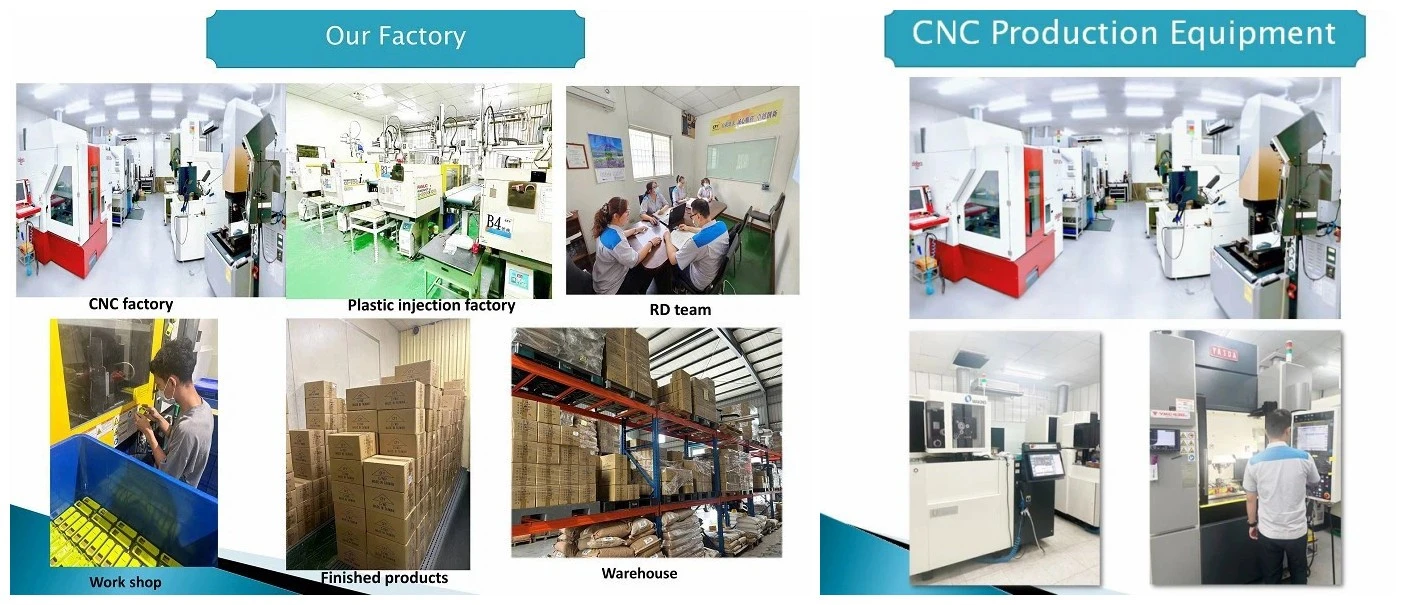
As one of the leading 5 axis cnc manufacturers and suppliers, we warmly welcome you to buy discount 5 axis cnc for sale here from our factory. All customized products are with high quality and competitive price. For pricelist and free sample, contact us now.
cnc machining plastic, micro 5 axis cnc, metal molds(0/10)