CNC milling is a manufacturing process that uses a cutting tool mounted on a rotating spindle to selectively remove material from a block of raw substrate. The workpiece is rigidly mounted to a table, and this table moves or rotates on different planes so the tool can work at many angles. Sophisticated CNC milling machines can have 5 or more axes of independent motion to make more complex shapes or to avoid having to move the workpiece to a separate machine.

The number of tooling is greatly reduced, and complex tooling is not required for processing parts with complex shapes. If you want to change the shape and size of the part, you only need to modify the part processing procedure, which is suitable for new product development and improvement.
The processing quality is stable, the processing precision is high, and the repeat accuracy is high, which can meet the high-quality processing requirements.
The production efficiency is higher in the case of multi-variety and small batch production, which can reduce the time of production preparation, machine tool adjustment and process inspection, and reduce the cutting time due to the use of the best cutting amount.
It can process complex profiles that are difficult to process by conventional methods, and even process some unobservable processing parts.
Vertical milling
With vertical milling, a 3-axis milling table is the work surface, which sits below the arm, to which a spindle is attached.
The spindle can be stationary if a turret vertical mill is used. In this case, the table moved along both X and Y axes.
Meanwhile, the table only moves along the X-axis if a bed vertical mill is used. The spindle travels along the length of the arm in the Y-axis direction.
Horizontal milling
With horizontal milling, the spindle operates horizontally instead of vertically, and all other horizontal CNC milling machine components are similar to vertical milling.
Generally speaking, horizontal mills are best suited to heavier projects or longer projects. They are also suited to parts that require a large amount of material to be removed as the swarf falls away from the part and cutter.
Face milling
The cutting tool’s axis of rotation is perpendicular to the surface of the workpiece. It employs face milling cutters, with teeth both on the periphery and the tool face, the latter of which is used for finishing applications. Face milling is also used to create flat surfaces and control a finished piece. Face milling can produce higher-quality finishes than other milling processes and is compatible with vertical and horizontal milling machines.
Plain milling
The cutting tool’s axis of rotation is parallel to the surface of the workpiece. Plain milling cutters have teeth on the periphery that perform the cutting operation. Both narrow and wide cutters are used. This allows for deeper cuts and for larger surface areas to be worked on. A coarse and fine-toothed cutter are both used. Slow cutting speeds and fast feed rates are used for the course cutter and vice versa for the fine-toothed cutter. This enables a more detailed final part.
Angular milling
This is a milling operation where the cutting tools’ axis of rotation is at an angle relative to the surface of the workpiece. Therefore, single-angled milling cutters can produce more angular features, such as grooves, serrations, or chamfers.
Form milling
Form milling is best used for milling operations where more irregular surfaces are involved. Contours, outlines, edges, or parts with curved, flat surfaces. It employed milling cutters or fly cutters specialised for particular applications – for example, concave cutters or corner rounding cutters. Hemispherical or semi-circular designs or other similarly intricate designs with complex parts would benefit from the form milling technique.
CNC Milling Process
Like any other conventional CNC machining, the milling process also uses computerized controls to navigate the cutting tools. Here is the process step by step:
Designing: The first step is to design a 2D or 3D model of the parts in CAD files. This is one of the most crucial parts of this process. The designer should make the design as detailed and specific as required while not complicating it too much.
Translating the cad model into code: In this step, the design is translated into CNC-compatible codes, which are readable by the machine. These converted codes will manipulate the cutters to navigate and remove the materials.
Manufacturers can identify any mistakes in the codes and fix them right away. In addition, they can make changes and amend the codes to make them more suitable with their equipment.
Machine setup: Although the machining process is entirely automatic, it still requires some manual interaction. For instance, adjusting the workpiece to the table or checking all the components.
After the setup is done, the operator or machinist examines the program thoroughly and gives the signal to run.
Production: This is the final step where actual production begins. The rotating tool or cutter comes in contact with the material. It removes the chips from it and gives it the desired shape.
Used in aerospace
Milling is a widespread process in the aerospace industry. CNC milling produces parts from various materials, including metals, plastics, and composites. CNC milling has many applications, and it can be used to produce parts for various products.
One example of an application for CNC milling is manufacturing aircraft components. Aircraft parts are typically made from metal or composite materials, and CNC milling is a great way to produce them quickly and accurately. It’s also helpful in producing small parts that would be difficult or impossible to machine using other methods.
Used in agriculture
Milling is a process that cuts or shapes material by rotating it around a cutting edge. This is done with a machine that is controlled by software, making it possible to produce intricate and precise parts. In agriculture, milling can make parts for everything from tractors to fertilizer machines. Here are some of the applications of CNC milling in agriculture:
Parts for tractors: Tractors need accurate parts and fit well together, which can be difficult to do using other methods. By using CNC milling, manufacturers can create parts quickly and easily, which means less time spent on repairs and more time farming.
Parts for irrigation systems: Irrigation systems use water to help plants grow. They need parts that can hold up under pressure and withstand heat, which can be challenging to make using other methods. By using CNC milling, manufacturers can create parts that are exact copies of the originals. This means less chance of mistakes and better irrigation performance for farmers.
Used in automotive industry
The CNC milling process is versatile in creating intricate parts for automotive applications. The process can be used to create parts from metal, plastic, or other materials. Some of the most common uses for CNC milling are in manufacturing car parts and accessories, motor vehicles, and aircraft components.
Some of the benefits of using a CNC milling process over other manufacturing methods include creating complex parts with detailed features, increased accuracy and repeatability, and reduced processing time. Additionally, CNC milling can create indistinguishable parts from those produced using traditional machining techniques.
Used in medical manufacturing
CNC milling is a very versatile process that can be used in many different industries. One of the most common applications of CNC milling parts is in the medical manufacturing industry. With CNC milling, parts can be quickly and accurately made without needing a lot of manual labour. Additionally, CNC milling can create parts that are much more accurate and consistent than those made using other techniques.
1.When not in use for a long time, after turning on the machine, first return the machine to its original point, and then warm up the spindle for about 30 minutes.
2.The filter of the oil cooler should be cleaned in time, which can reduce the power consumption of the oil cooler and improve the cooling efficiency.
3.Before each machining stop, move the three axes to the middle position, and then power off to clean the machine.
4.Check the oil level of the spindle oil cooler every 2 months.
5.The water in the air of the air source filter should be drained in time.
6.Adjust the tool coolant valve to cool the cutting area of the tool with an appropriate flow.
7.Do not use a high-pressure air gun to clean up after processing. Use cutting water as much as possible.
8.When using water-soluble cutting fluid, adjust the water-oil ratio.
9.The tool setting instrument is a very precise measuring instrument. If the surface is not clean, it will affect the measurement accuracy. Therefore, it should be protected by a protective cover when it is not in use.
10.At any time when you encounter an unexpected situation, press the emergency stop button as soon as possible.
11.Check the level of the machine every 6 months to ensure that the level is controlled within 0.02 / 300.
Regular cleaning
It is essential to keep the machine clean and free from dust and debris. Use a soft cloth or brush to remove dirt and dust from the machine's surface, and vacuum any debris from inside the machine.
Lubrication
The machine's moving parts require lubrication to reduce friction and wear. Check the manufacturer's recommendations for the type of lubricant to use and the frequency of lubrication. Apply lubricant to the machine's ways, bearings, and other moving parts according to the manufacturer's specifications.
Tool maintenance
Regularly inspect and replace worn cutting tools. Dull cutting tools can cause poor surface finish, increased cycle time, and premature failure of the tool and machine components. Keep spare cutting tools on hand and replace them as needed.
Air filter replacement
The machine's air filter prevents dust and debris from entering the machine's internal components. Replace the air filter regularly according to the manufacturer's recommendations to ensure proper airflow and prevent damage to the machine's components.
Electrical component inspection
Regularly inspect the machine's electrical components, such as motors, sensors, and cables, for signs of wear or damage. Check for loose connections or frayed wires and replace any damaged components immediately.
Calibration
Calibrate the machine regularly to ensure accurate measurements and repeatable results. Check the machine's calibration manual or consult with the manufacturer to determine the appropriate calibration procedures.
Emergency stop and safety mechanisms
Ensure that the emergency stop button and safety mechanisms are functioning properly. Test the emergency stop button regularly to ensure that it stops the machine immediately when activated.
Training and documentation
Provide regular training to machine operators on proper operation and maintenance procedures. Maintain documentation of maintenance procedures and schedules to ensure consistency and compliance with maintenance protocols.
Preventive maintenance
Implement a preventive maintenance program to identify potential issues before they become significant problems. This can include routine inspections, oil changes, and other maintenance tasks recommended by the manufacturer.
Troubleshooting
If the machine experiences any issues, troubleshoot the problem immediately to minimize downtime. Consult the machine's manual or contact the manufacturer for assistance in identifying and resolving the issue.
Machine type
CNC milling machines come in various types, such as vertical machining centers (VMCs), horizontal machining centers (HMCs), and 5-axis machines. Consider the type of work you will be performing and select the machine type that best suits your needs.
Machine size
The size of the machine should match the size of the workpieces you will be machining. Larger machines can handle larger workpieces but also require more space in your facility.
Machine speed and precision
Consider the speed and precision requirements of your application. Some machines are designed for high-speed machining, while others offer higher precision and accuracy.
Machine control system
The control system determines the machine's capabilities and ease of use. Look for machines with user-friendly controls and advanced features such as automatic tool changers, pallet changers, and integrated software.
Machine build quality
The build quality of the machine can affect its longevity and reliability. Consider the materials used in constructing the machine, the quality of the components, and the manufacturer's reputation for building durable machines.
Machine accessories
Some machines come with additional accessories such as rotary tables, indexing heads, and automated loading systems. Evaluate your needs and select a machine that comes with the necessary accessories to maximize productivity.
Budget
Determine your budget and select a machine that fits within your financial constraints. Keep in mind that the initial cost of the machine is just one part of the total cost of ownership, which includes maintenance, replacement parts, and labor costs.
Supplier support
Consider the level of support provided by the machine supplier. Look for a supplier that offers technical support, training, and maintenance services to ensure that you get the most out of your investment.
Application requirements
Consider the specific requirements of your application, such as the type of materials to be machined, the complexity of the parts, and the production volume. Select a machine that meets your application requirements and can accommodate future expansion.
Machine demo
Before making a purchase decision, request a demo of the machine to evaluate its performance and ease of use. This will give you a better understanding of whether the machine meets your needs and requirements.
How CNC Milling Works
CNC milling is a subtractive manufacturing process that involves removing material from a workpiece using rotating cutting tools. The workpiece is secured to the machine's table, and the cutting tool is programmed to move in a specific pattern to create the desired shape and size of the finished product. Here's a detailed explanation of how CNC milling works:
Designing the part: The first step in CNC milling is designing the part using computer-aided design (CAD) software. The designer creates a 3D model of the part and specifies all the dimensions and features required for the finished product.
Creating the program: The CAD file is then used to generate a computer numerical control (CNC) program, which contains instructions for the machine to perform the milling operation. The CNC program is written in a programming language called G-code, which tells the machine where to move the cutting tool and how fast to move it.
Loading the material: The workpiece material is loaded onto the machine's table. The workpiece can be made of various materials, including metals, plastics, and composites. The material must be secured to the table using clamps or fixtures to prevent movement during the milling operation.
Positioning the tool: The cutting tool is mounted on a spindle that rotates at high speeds. The tool is positioned above the workpiece and lowered into contact with the material using a computer-controlled mechanism.
Cutting the material: The cutting tool moves in a pre-determined pattern based on the instructions in the CNC program. The tool removes material from the workpiece by cutting away excess material. The tool can move along multiple axes simultaneously, allowing for complex shapes and contours to be machined.
Finishing the part: Once the milling operation is complete, the finished part is removed from the machine's table. Depending on the application, the part may require additional finishing operations, such as sanding, polishing, or coating.
CNC milling is a highly automated manufacturing process that allows for precise and efficient removal of material from a workpiece to create custom parts and components. The process involves designing the part using CAD software, generating a CNC program, loading the material, positioning the tool, cutting the material, and finishing the part. With the advancements in technology, CNC milling has become an essential tool in modern manufacturing, enabling high-quality and cost-effective production of complex parts and components.
CFY specialize in plastic injection, CNC turning, CNC milling, CNC grinding and have successfully collaborated with companies in these field. We have over 14 years' experience on this field. We specialize in producing various types of components, which are widely applicable to aviation, hand tools, electronics, electrical appliances, automotive, machinery, construction materials, optics, electronic gadgets, cosmetics, and household items.
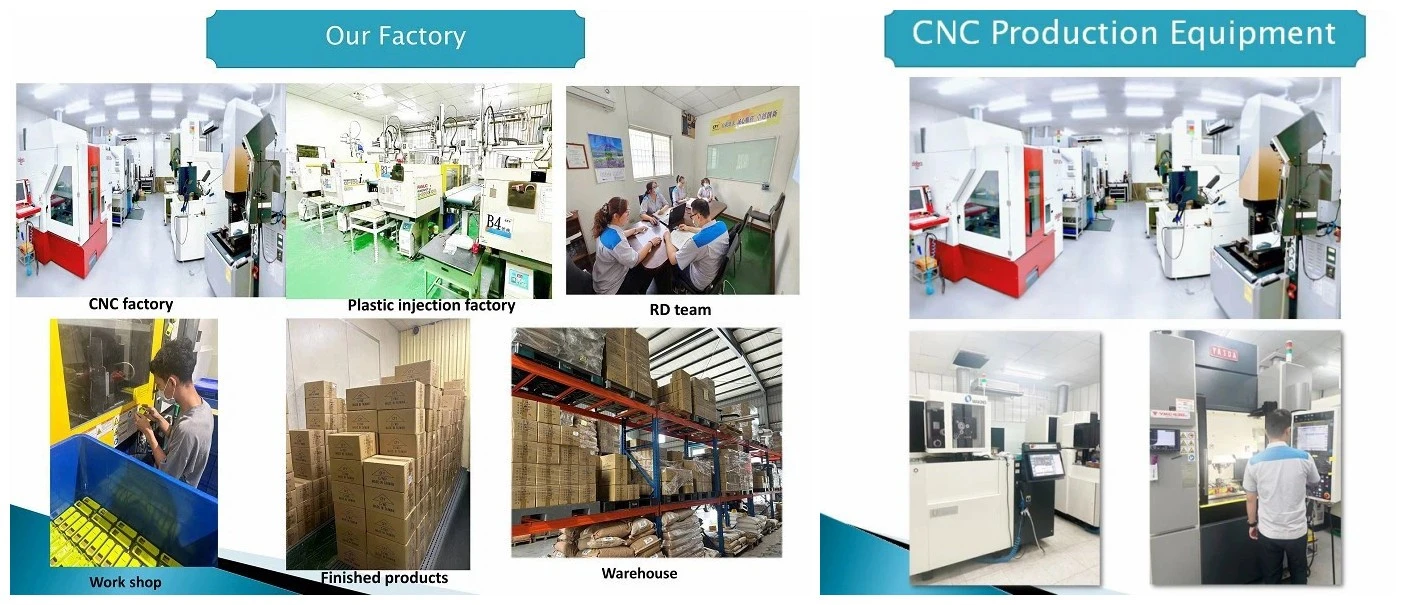
As one of the leading cnc milling manufacturers and suppliers, we warmly welcome you to buy discount cnc milling for sale here from our factory. All customized products are with high quality and competitive price. For pricelist and free sample, contact us now.
injection molding production, machined plastic, Aluminum Machining Service(0/10)