


CNC Milling Turning
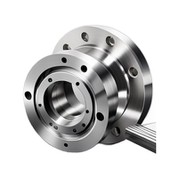
CFY is a professional CNC turning manufacturer specializing in the production of metal punching, cnc milling parts, cnc lathe components. We focus on the design and manufacturing of small, complex precision stamped components, boasting a team of engineers with 14 years of stamping experience.

- Product Introduction
CFY is a professional CNC turning manufacturer specializing in the production of metal punching, cnc milling parts, cnc lathe components. We focus on the design and manufacturing of small, complex precision stamped components, boasting a team of engineers with 14 years of stamping experience. We are committed to achieving higher quality and technical standards to meet the demands of every customer and market. Today's buyers and the global market not only seek high-quality and cost-effective products but also pay attention to how suppliers address their complex issues and make them simple.
Punching, Piercing, and blanking are three common metal processing techniques used for processing metal raw materials, such as sheet metal. All three processes involve the use of machines that deform or alter the physical characteristics of the metal material in some way. While punching, Piercing, and blanking share similarities, they serve different purposes. Below, you will find an overview of each processing technique and how they work.
What is Piercing?
Piercing is a shearing process where a processing tool is used to punch holes into the raw material, forming circular or other shaped perforations. When the metal material is pierced, the metal in the newly created hole is considered scrap. A piercing machine forces a tool called a blanking punch through the metal sheet.
What is Punching?
Punching is a mechanical machining process involving the removal of waste metal from a sheet of metal raw material. It requires the use of a punch press to compress a tool through the metal sheet. While punching is typically done with metal sheets, it also supports other materials such as paper, plastic, and various fibers. When the punch press is pressed against the die, it pierces the metal sheet. As a result, the punched metal sheet takes on the shape of the die used.
What is Blanking?
Blanking is often confused with punching as both processes involve cutting holes in the metal raw material. However, they are not necessarily the same. Through blanking, the metal in the holes is preserved and utilized rather than discarded. In other words, manufacturing companies perform blanking to create small metal parts, while punching is done to create metal objects with single holes.
A key point to remember is that blanking results in creating multiple metal parts from a single metal sheet. In contrast, punching and perforating typically form a hole in the metal sheet.
As you can see, punching, perforating, and blanking are three distinct machining operations. They are all used to manipulate sheet metal, but each operation works differently. Punching is the process of creating holes by using a tool to punch through metal raw material. Stamping uses a machine with a die to manufacture metal objects with specific shapes. Finally, blanking is a machining process used to create small metal parts.
Numerical Control Milling is a machining process that involves the use of rotating multi-point cutting tools and computer control to progressively remove material from a workpiece, producing custom-designed parts or components. These systems typically have three linear degrees of freedom. They can freely move around the X, Y, and Z axes while the workpiece remains stationary. This limited-size operation reduces operational speeds, making milling more suitable for prototype fabrication and smaller production runs.
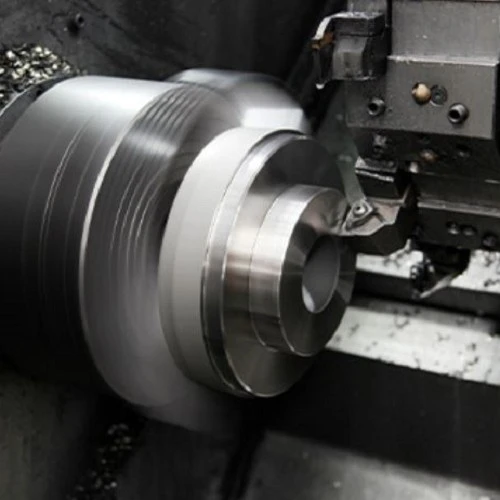
Numerical Control Turning is a manufacturing process that involves securing material rods in a chuck and rotating them while feeding cutting tools into the workpiece to remove material until the desired shape is achieved. Since the desired shape is achieved through material removal, it is also known as subtractive manufacturing.
If CNC turning center has only one turret, all operations can be completed from one side. However, some turning centers feature a main spindle and a sub-spindle, enabling faster operations. With this configuration, the main spindle partially processes the workpiece, and then the workpiece is moved to the sub-spindle to complete operations on the other side of the part. The speed of CNC turning processes makes it an ideal method for high-volume production with short delivery times.
Product details:


Packing Details : Carton, Wooden case, pallet, or according to the customers' requirements.
Delivery Detail: 25-35 days by sea, 3-7 days by air
FAQ
Q: How can I reduce my manufacturing costs?
*Utilize popular materials and explore different types of pricing.
*Harder materials (such as steel and stainless steel) tend to be more expensive than softer materials (such as aluminum, plastics, etc.).
*Opt for 2D parts made from sheet material rather than 3D parts made from block material. Stack 2D parts or bend them to create 3D shapes.
*Maximize part functionality to reduce the variety of parts.
*Increase quantities to lower the cost per part.
*Apply the loosest applicable tolerances.
Q: What format must my CAD files be in?
We process 3D models in the following formats: STEP, STP
You can transfer production drawings to us as PDF
Q: What are your tolerances for machined parts?
The local tolerance for most metal geometries is +.005"/-.005", and for plastics, it is +/- 0.010". Tolerances for large parts may vary, especially in maintaining flatness for large components after heat treatment.
The surface finish for "Milling Operations" on CNC parts is a minimum of 125.
All manufactured parts have tolerances of ±0.010" for dimensions and ±1° for angles.
Threaded holes, not explicitly defined as features on the referenced CAD model, can be machined to the specified diameter in the model.
Q: What are the advantages if choosing CNC to make my parts?
Nearly all engineering plastics and metal materials can be processed, ensuring consistency between prototype and production parts. Additionally, it offers high dimensional stability, precision machining accuracy, and high repeatability. CNC machined parts surpass 3D printed parts in terms of accuracy, strength, surface finish, and material availability.
Hot Tags: cnc milling turning, cnc milling turning manufacturers, suppliers, factory, Precision CNC Turning, cnc machine cutting aluminum, Aerospace Injection Molding, core and cavity injection molding, machined aluminum parts, 3 axis cnc